
How can you cool a military vehicle when the engine is off?
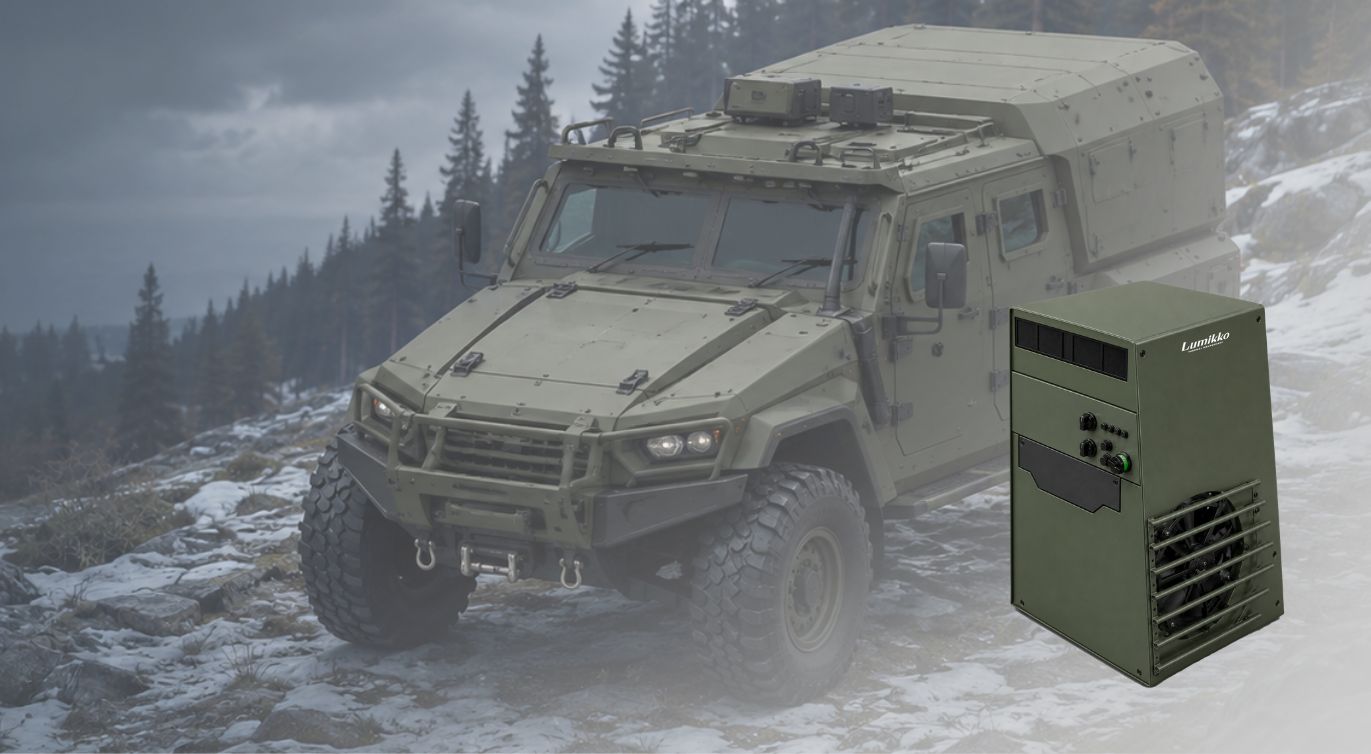
A military vehicle can be cooled with the engine off using a battery-powered auxiliary air conditioning unit that draws from the vehicle’s onboard electrical system. This approach reduces the need to run the main engine solely for climate control, which matters in tactical situations where noise, fuel consumption, and thermal signature are operational concerns. The sections below address the most common questions about engine-off cooling for defense vehicles.
What options exist for cooling a military vehicle without running the engine?
The primary option for engine-off cooling in a military vehicle is a battery-powered parking and auxiliary air conditioning unit that operates on the vehicle’s 24/28 VDC electrical system. These units use the onboard battery to drive a refrigerant-based cooling cycle, maintaining acceptable temperatures inside the crew compartment without engaging the main engine. The cooling capacity and runtime depend on the battery system, the selected operating point, and the thermal load inside the vehicle.
Beyond battery-powered systems, some platforms use shore power connections when stationary at a fixed facility, allowing the main engine to remain off while an external power source supports climate control. This option may not be available in all field conditions. For tactical vehicles operating away from fixed infrastructure, a self-contained battery-powered unit is typically the most practical approach.
The operating point of a battery-powered unit can usually be adjusted to balance cooling performance against electrical consumption. For example, a system capable of delivering up to 5 kW of cooling at maximum output may be set to a lower operating point when battery runtime is the priority and crew comfort requirements are less demanding. This flexibility makes battery-powered cooling relevant across a range of tactical scenarios.
Why does engine-off cooling matter so much in military operations?
Engine-off cooling matters in military operations because running a vehicle’s main engine solely to power the HVAC system creates significant tactical and logistical disadvantages. Acoustic signatures, fuel consumption, and thermal emissions can all affect a vehicle’s position or operational endurance. When a vehicle must remain stationary for extended periods during surveillance, command, or communications tasks, idling the engine purely for climate control is often not an acceptable solution.
Personnel inside a stationary vehicle continue to generate body heat, and onboard electronics, including communication systems, computers, and sensor equipment, contribute additional thermal load. Without active cooling, interior temperatures can rise to levels that affect both crew performance and equipment reliability. Engine-off cooling addresses this without requiring the engine to remain running.
From a logistics perspective, reducing unnecessary engine runtime can also extend service intervals and reduce fuel demand in the field. For defense operators managing complex supply chains in remote or contested environments, reductions in fuel consumption and maintenance frequency carry operational value.
How does a battery-powered HVAC system work in an armored vehicle?
A battery-powered HVAC unit in an armored vehicle uses the vehicle’s existing battery system as its power source to drive a refrigerant-based cooling cycle. The unit draws electrical current at 24 or 28 VDC, powers a compressor and associated components, and transfers heat from the crew compartment to the exterior. The system operates independently of the main engine, allowing cooling to continue while the vehicle is stationary and switched off.
The relationship between cooling output and electrical consumption is a key design consideration. A unit operating at maximum output delivers the highest cooling capacity but draws the most current, which reduces battery runtime. At a lower operating point, the same unit draws less current and extends runtime while providing reduced but still meaningful cooling. The appropriate operating point depends on the ambient temperature, internal heat load, crew requirements, and how long the vehicle is expected to remain stationary. Actual operating duration depends on battery capacity, electrical load, and operating conditions.
When the vehicle is moving, the same unit can operate as an auxiliary cooling system alongside the main engine-powered HVAC. This dual-mode capability means the unit contributes to thermal management both during stationary periods and during operation in high ambient temperatures or when internal heat loads exceed what the primary system can manage alone.
What standards and requirements apply to military vehicle HVAC systems?
Military vehicle HVAC systems are subject to a range of application-specific and project-specific requirements rather than a single universal standard. Applicable standards and specifications depend on the platform, the customer’s national defense organization, and the operating environment. Standards from bodies such as MIL-STD, STANAG, and various national defense specifications may be referenced as part of a project’s technical requirements, but compliance with specific standards is always confirmed at the project level rather than assumed.
Beyond formal standards, military HVAC systems are typically required to demonstrate reliable operation across a defined temperature range, withstand vibration and shock loads associated with vehicle operation, and function in conditions involving dust, moisture, and other environmental factors. Electrical compatibility with the vehicle’s power architecture is also a core requirement, as is the ability to integrate with the vehicle’s control systems and, where applicable, CBRN filtration systems.
Verification and testing are defined according to project requirements. The specific test methods, performance thresholds, and qualification criteria are agreed upon between the system developer and the customer as part of the development process. A manufacturer’s quality management certifications, such as ISO 9001, confirm the quality system under which the product is developed and produced but do not themselves constitute product qualification against military standards.
How is an engine-off cooling system integrated into an existing military platform?
Integrating an engine-off cooling system into an existing military platform begins with a detailed assessment of the vehicle’s structural, electrical, and operational characteristics. The installation location, whether on the roof, at the rear, or within the vehicle’s superstructure, is selected based on available space, airflow requirements, protection from the operating environment, and access for maintenance. No single integration approach applies to all platforms.
The electrical interface must be compatible with the vehicle’s battery system and control architecture. This includes sizing the electrical connection for the current draw at the selected operating points, integrating the unit’s controls with the vehicle’s existing systems, and ensuring that the additional electrical load is within the battery system’s capacity for the intended operating duration. Ducting and airflow routing are also designed around the specific vehicle interior to direct conditioned air effectively to the crew compartment.
For vehicles that already have a primary HVAC system, the auxiliary unit is designed to complement rather than replace it. The integration accounts for how the two systems interact during different operating modes, ensuring that the auxiliary unit can operate independently when the engine is off and in parallel with the primary system when additional capacity is needed during vehicle operation. Each integration is engineered around the specific platform and its mission requirements rather than treated as a standard installation.
Lumikko has developed thermal management and cooling solutions for mobile equipment and defense applications since 1985. The Parking and Auxiliary Air Conditioning solution is designed for exactly this type of application, providing battery-powered engine-off cooling and additional HVAC capacity while driving, in a unit that can be configured for the specific vehicle, electrical system, heat load, and mission profile. Reach out to us to discuss the right solution for your platform.