
Why military vehicles may need additional cooling in hot environments?
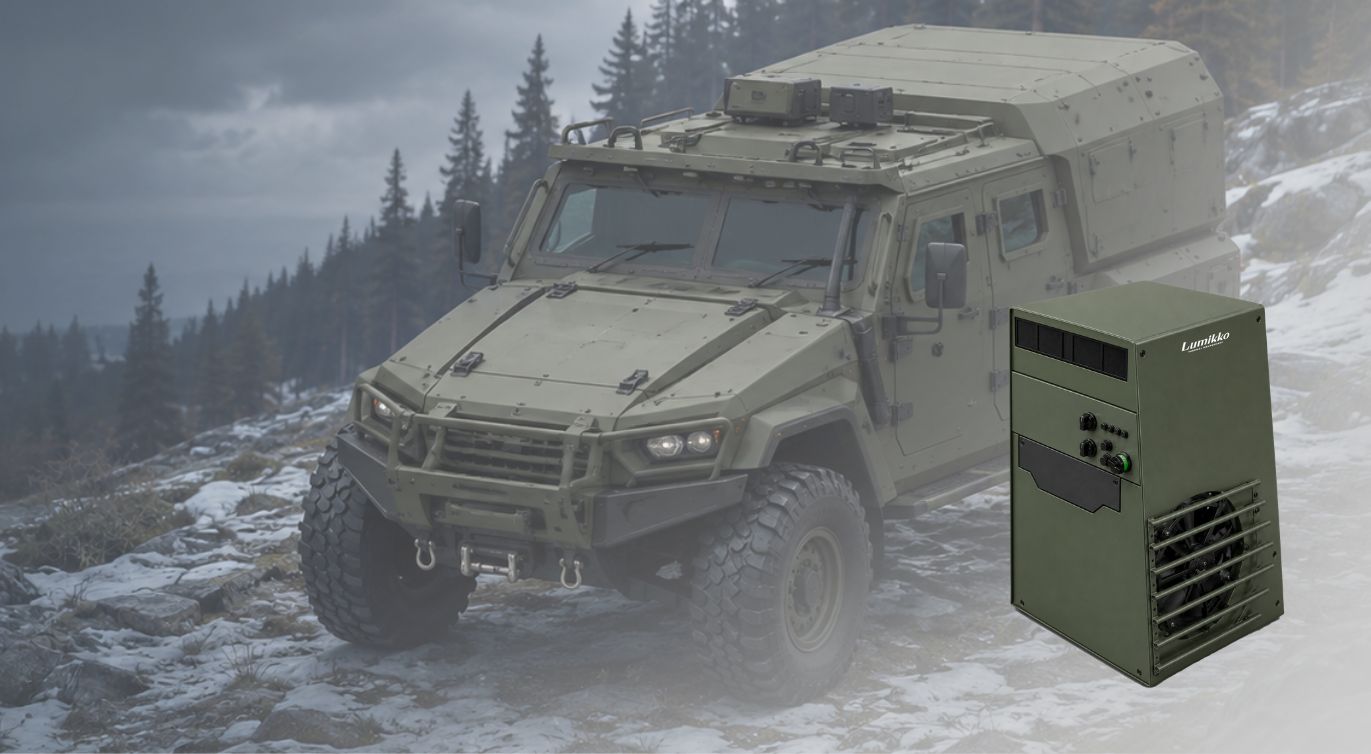
Military vehicles operating in hot environments often need additional cooling beyond their standard HVAC systems because they generate significantly more heat than conventional vehicles. High-power electronics, crew density, armor insulation, and mission-specific equipment all contribute to internal heat loads that a primary climate system may not be designed to handle alone. The sections below examine the key reasons and technical considerations in detail.
What makes military vehicles generate more heat than standard vehicles?
Military vehicles generate more heat than standard vehicles because they combine multiple high-output heat sources in a confined, heavily insulated space. Unlike civilian vehicles, military platforms carry power-intensive electronics, communication systems, sensors, and weapon systems alongside a crew, all of which produce continuous thermal loads that a conventional vehicle would never encounter.
Armor plating and ballistic protection reduce the vehicle’s ability to dissipate heat naturally through the body structure. In a standard vehicle, some heat transfer occurs through the bodywork itself. In an armored vehicle, that path is largely blocked, which means heat generated inside accumulates more rapidly.
On top of this, military vehicles are often equipped with auxiliary power units, computing hardware, and radio systems that run continuously during operations. Command and communications vehicles in particular can carry equipment generating substantial heat even when the main engine is switched off and the vehicle is stationary. The combination of restricted heat dissipation and multiple internal heat sources creates thermal conditions that go well beyond what a standard automotive HVAC system is designed to manage.
How does extreme heat affect military vehicle performance and crew safety?
Extreme heat in military vehicles affects both crew performance and equipment reliability. Elevated interior temperatures reduce crew alertness and physical capability, which directly impacts operational effectiveness. At the same time, heat-sensitive electronics, including navigation systems, fire control computers, and communication equipment, may experience reduced performance or reliability when operating outside their specified temperature ranges.
For personnel, sustained exposure to high interior temperatures increases fatigue and reduces decision-making capacity. In tactical situations, this is a meaningful operational risk rather than a comfort issue. Soldiers operating in a vehicle with inadequate cooling are working under conditions that degrade their physical and cognitive performance over time.
For onboard systems, the consequences of overheating depend on the specific equipment. Electronics designed for controlled operating environments may suffer from reduced reliability or shortened service life when consistently exposed to temperatures beyond their design range. In mission-critical applications, this is a significant concern. Maintaining suitable interior temperatures is therefore both a crew welfare requirement and a system reliability requirement.
What types of cooling systems are used in military vehicles?
Military vehicles typically use engine-driven HVAC systems as their primary climate control, supplemented in many applications by auxiliary or parking cooling units that can operate independently of the main engine. The specific configuration depends on the vehicle platform, mission profile, crew size, and the heat loads generated by onboard equipment.
Engine-driven systems provide the primary cooling capacity while the vehicle is moving and the engine is running. These systems are engineered for the specific vehicle, taking into account the thermal load from personnel and electronics, the ambient temperature range the vehicle will operate in, and any applicable standards or protection requirements.
Auxiliary and parking cooling units address the situations where the main engine is switched off but the crew and equipment remain active inside the vehicle. These battery-powered units provide cooling capacity independently of the engine, allowing interior temperatures to be managed during stationary operations. Lumikko’s parking and auxiliary air conditioning solution, for example, can provide up to 5 kW of cooling capacity and operates on a 24/28 VDC vehicle battery system, with selectable operating points that balance cooling performance against battery runtime.
In some applications, HVAC systems are integrated with CBRN filtration to provide both climate control and protection against airborne contaminants. The appropriate combination of systems is determined by the platform requirements and the operating environment.
Why is off-the-shelf cooling equipment often insufficient for defense applications?
Off-the-shelf cooling equipment is generally insufficient for defense applications because it is designed for standard operating conditions, not the vibration, temperature extremes, space constraints, and reliability requirements that military platforms impose. A commercial air conditioning unit built for a building or a standard vehicle will not be engineered to withstand the mechanical stress, dust exposure, and operational demands of a defense environment.
Military vehicles operate across a wide range of climatic conditions, from arctic cold to desert heat, and they are subject to significant vibration and shock loads during operation. Standard cooling equipment is not designed or tested for these conditions. Components, refrigerant circuits, and control systems that perform reliably in a controlled environment may fail under the continuous vibration and temperature cycling of a tactical vehicle.
Beyond durability, defense applications often involve specific standards, electrical system requirements, and integration constraints that commercial products do not address. The available installation space in a military vehicle may be highly restricted, requiring a compact unit designed around the vehicle’s architecture rather than a unit the vehicle must be adapted to accommodate. Cooling capacity must also be sized accurately for the actual thermal load: undersizing creates operational risk, while oversizing wastes space and electrical power.
For these reasons, defense vehicle cooling systems are typically engineered as tailored solutions rather than selected from a standard catalogue.
What should defense equipment manufacturers consider when specifying a vehicle cooling system?
When specifying a cooling system for a defense vehicle, manufacturers should consider the full thermal load, the operating environment, the electrical system, the available installation space, and the mission profile. No single factor determines the correct solution: the right system emerges from understanding how all of these variables interact for the specific platform.
The thermal load calculation must account for personnel, all onboard electronics, ambient temperatures across the expected operating range, and the vehicle’s heat dissipation characteristics. For vehicles that spend significant time stationary with the engine off, the cooling system must be able to manage interior temperatures without relying on the main engine, which requires a battery-powered auxiliary or parking cooling capability.
The vehicle’s electrical system defines what auxiliary cooling equipment can realistically be powered and for how long. Battery capacity, available current, and the competing demands of other onboard systems all influence what cooling output is sustainable in engine-off operation. The relationship between cooling performance and battery runtime is a key design consideration that must be resolved for the specific vehicle and mission.
Installation constraints in armored and tactical vehicles are often significant. The cooling unit must fit within the available space, allow for adequate airflow, and remain serviceable under field conditions. Integration with the vehicle’s control architecture and, where applicable, with CBRN filtration systems adds further complexity that requires engineering input rather than a catalogue selection.
Lumikko has been developing thermal management and HVAC solutions for defense applications for over 40 years, with customers including Patria and Millog. All systems are designed and manufactured in Finland, with verification and testing defined according to project requirements.
If you are specifying a cooling system for a military or special-purpose vehicle, the requirements of your platform, including the vehicle architecture, heat loads, electrical system, operating environment, and mission profile, should form the basis of the specification. Discuss your vehicle cooling requirements with Lumikko to explore whether a parking and auxiliary air conditioning unit, a primary HVAC system, or a combination of both is the right approach for your application. Would you like more information about our solutions? Reach out to us, and let’s create the right solution together.