
What is the difference between parking and auxiliary air conditioning?
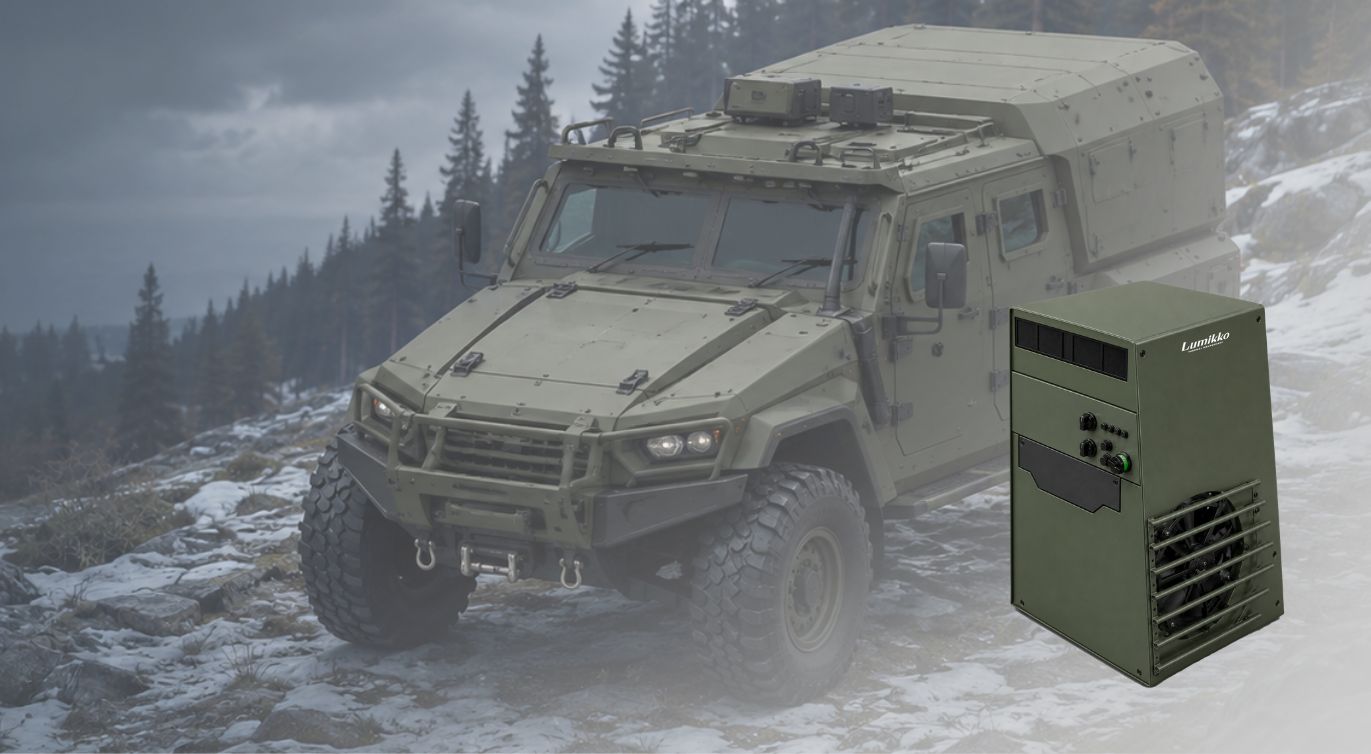
Parking and auxiliary air conditioning serve different cooling needs in vehicles and mobile platforms. Parking air conditioning provides cooling when the main engine is switched off, typically using battery power. Auxiliary air conditioning supplements the vehicle’s primary HVAC system when additional cooling capacity is needed, for example during demanding driving conditions. Depending on the system design, both functions can be provided by the same unit. The sections below explain how these functions differ, where they are used, and how to determine the right solution for a specific vehicle.
How does parking air conditioning work?
Parking air conditioning provides cooling inside a vehicle when the main engine is not running. Unlike conventional engine-driven air conditioning systems, a battery-powered parking AC unit uses an electrically driven compressor, allowing it to provide cooling even when the vehicle’s main engine is switched off.
This approach allows personnel to remain inside a vehicle without depending on the main engine for thermal comfort. The cooling output and electrical draw can typically be adjusted according to priorities: a lower operating point conserves battery charge, while a higher output delivers greater cooling performance. The appropriate balance depends on how long the vehicle will remain stationary, the ambient temperature, internal heat loads from personnel or equipment, and the available battery capacity.
For military and special-purpose vehicles, this capability is particularly relevant. Tactical platforms often remain stationary for extended periods during operations, with communication systems, computers, sensors, and other electronics continuing to generate heat inside the vehicle. A battery-powered parking air conditioning unit provides a way to manage these thermal conditions without running the main engine.
What is auxiliary air conditioning and where is it used?
Auxiliary air conditioning is a supplementary cooling system that operates alongside a vehicle’s primary HVAC system while the vehicle is moving. It provides additional cooling capacity when the main system alone cannot meet the thermal demand created by high ambient temperatures, elevated internal heat loads, or demanding operational conditions.
Auxiliary AC is used in applications where the primary HVAC system is correctly sized for typical conditions but may be insufficient during peak thermal loads. Common situations include vehicles operating in hot climates, platforms carrying significant electronic equipment that generates internal heat, and vehicles with high crew density. In these cases, auxiliary cooling acts as a parallel thermal management resource rather than a replacement for the main system.
In the defense sector, auxiliary cooling is relevant for command vehicles, communications vehicles, and sensor-equipped platforms where electronics contribute substantially to the internal heat load.
In industrial and mobile machinery applications, auxiliary air conditioning can provide additional cooling for operator cabins and occupied compartments during demanding operating cycles. Power electronics and battery systems may require separate, dedicated thermal management solutions depending on their cooling requirements.
What are the key differences between parking and auxiliary air conditioning?
The main difference lies in when and why cooling is needed. Parking AC provides cooling when the vehicle’s engine is switched off, while auxiliary AC supplements the main HVAC system when additional cooling capacity is required. In Lumikko’s solution, both functions can be combined in one unit.
| Feature | Parking AC | Auxiliary AC |
|---|---|---|
| Primary purpose | Engine-off cooling | Additional cooling capacity |
| Typical operating situation | Stationary, engine off | Driving with primary HVAC |
| Power source | Vehicle battery system | Vehicle electrical system |
| Main benefit | Cooling without engine idling | Additional cooling under high loads |
| Combined in one unit | Yes | Yes |
Power supply and energy management are also important considerations. In parking mode, battery runtime depends on the unit’s electrical power consumption, usable battery capacity, and other electrical loads. Cooling capacity and electrical power consumption are not the same: a unit delivering 5 kW of cooling does not necessarily consume 5 kW of electrical power. During driving, power may be supplied through the vehicle’s charging system, but the available electrical capacity must still be sufficient to support the auxiliary unit alongside other vehicle systems.
Which system is right for a specific vehicle or application?
The right system depends on the vehicle’s operating profile, thermal load, electrical architecture, and mission requirements. If a vehicle frequently operates with the engine off and personnel or equipment inside, parking air conditioning is the primary requirement. If the main HVAC system is insufficient during high-load driving conditions, auxiliary cooling is the relevant capability.
Several factors should be assessed when selecting a cooling approach:
- Engine-off duration: How long does the vehicle typically remain stationary with personnel or equipment inside?
- Internal heat loads: What equipment is installed, and how much heat does it generate?
- Ambient operating conditions: What temperature range does the vehicle operate in?
- Battery capacity and electrical power: Does the vehicle have sufficient usable battery energy for the required engine-off cooling duration, and can its electrical system support the unit’s power demand without compromising other essential functions?
- Primary HVAC capacity: Is the existing system adequate for typical driving conditions, or does it fall short during peak loads?
- Installation space: Where on the vehicle can a unit be mounted, and what integration constraints apply?
Because these factors vary considerably between platforms, the appropriate cooling solution should be designed around the specific vehicle and its operational requirements rather than selected from a generic catalog.
Can parking and auxiliary air conditioning be combined in one system?
Yes, a single unit can serve both functions. A combined parking and auxiliary air conditioning system provides battery-powered cooling when the engine is switched off and additional cooling capacity alongside the primary HVAC system while the vehicle is moving. This dual-mode capability means one integrated unit addresses both stationary and driving thermal management requirements.
Lumikko’s parking and auxiliary air conditioning solution for military and special-purpose vehicles is designed around this dual-mode approach. Operating at 24/28 VDC from the vehicle’s battery system, the unit can deliver up to 5 kW of cooling capacity,with different operating points that allow cooling performance and electrical power consumption to be balanced according to the vehicle’s operational requirements. Installation can be configured for the roof, rear, or other vehicle-specific locations depending on available space, airflow requirements, and serviceability considerations.
Combining parking and auxiliary cooling in one unit can reduce the need for separate additional cooling systems. It allows the same equipment to provide engine-off cooling and supplementary cooling while driving, while installation and integration are adapted to the vehicle’s electrical architecture, available space, and operating requirements.
Would you like more information about our solutions? Reach out to us, and let’s create the right solution together. If you are evaluating cooling options for a military or special-purpose vehicle, we encourage you to discuss your vehicle’s operating environment, heat loads, battery system, and mission profile with our team so that the cooling solution can be properly sized and integrated for your application.