
What should you consider before a military vehicle HVAC retrofit installation?
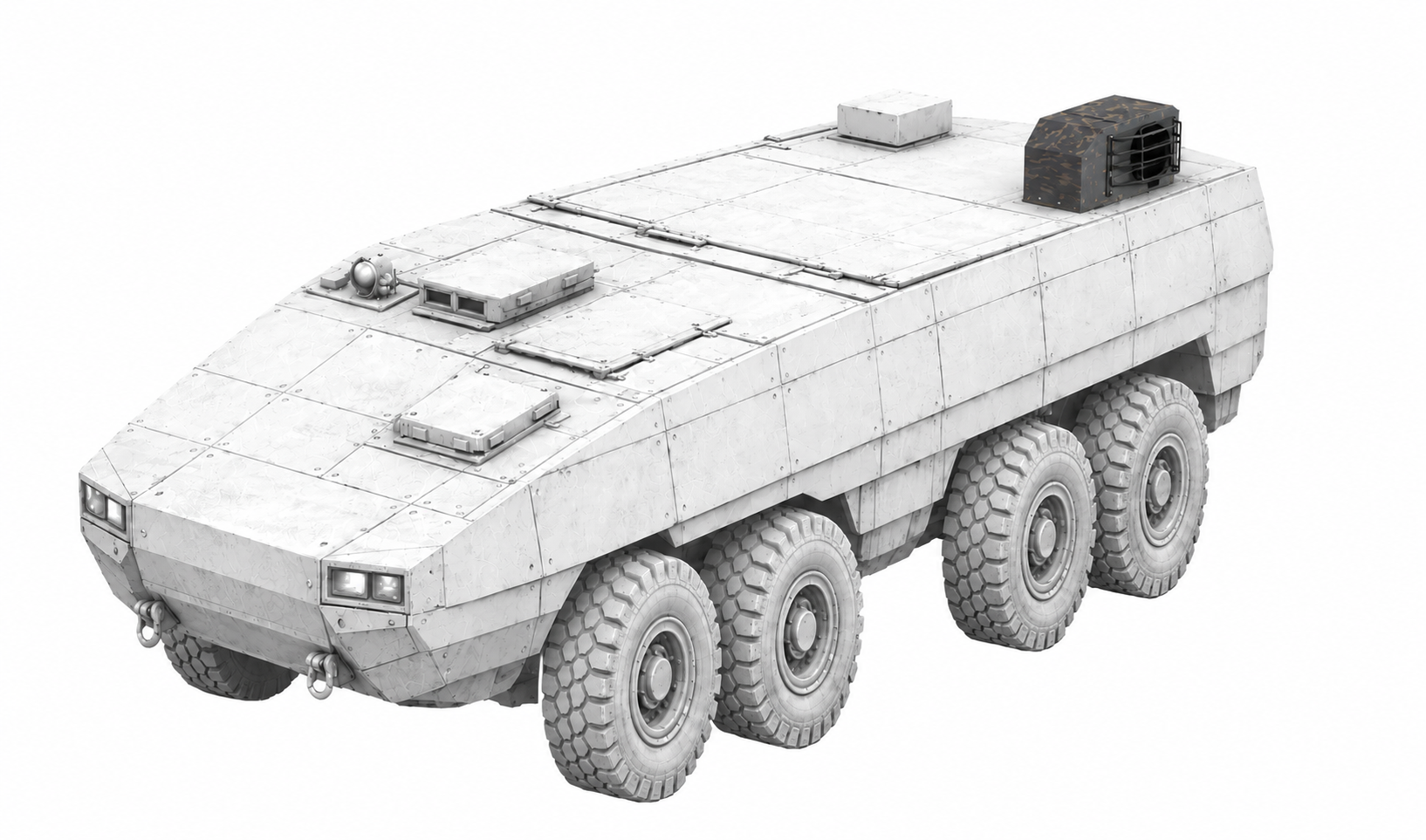
Before installing an HVAC system in a military vehicle, you need to assess the vehicle’s structural constraints, existing climate systems, available installation space, power supply, and the operational environment the vehicle will face. A military vehicle HVAC retrofit is a technically demanding process that differs significantly from standard commercial installations, and the right approach depends on the specific vehicle, its mission profile, and any applicable defense requirements.
Establish whether the retrofit requires cooling only or a wider HVAC upgrade. A standalone cooling and recirculation unit does not by itself provide all heating, fresh-air ventilation, and windscreen demisting functions. These requirements must be addressed by the overall vehicle system.
The sections below address the most important questions to work through before a retrofit project begins.
What makes military vehicle HVAC retrofits different from standard installations?
A military vehicle HVAC retrofit differs from a standard installation because defense vehicles operate in extreme and highly variable conditions, wide temperature ranges, dust, moisture, vibration, and demanding duty cycles, while also carrying strict space, weight, and power constraints. The system must be reliable enough to support crew performance and safety in environments where a failure cannot simply be tolerated.
Commercial HVAC installations typically follow relatively predictable building or vehicle specifications. Military retrofits, by contrast, must account for armored bodywork that limits where penetrations can be made, existing on-board systems that compete for electrical power, and mission requirements that may demand continuous operation across a broad range of outdoor temperatures. The installation must not compromise the vehicle’s structural integrity or operational capability.
What technical factors should be assessed before a retrofit?
Before a military vehicle HVAC retrofit, the key technical factors to assess are available installation space, the vehicle’s electrical system capacity, the existing thermal load inside the cabin, the number of personnel the system must support, and the environmental temperature range the unit will need to handle. Each of these factors directly influences which system is appropriate and how it should be configured.
Installation space is often the most immediate constraint. The mounting location must be structurally suitable and accessible for both installation and future maintenance. For example, a unit may be positioned adjacent to an existing roof hatch, but the optimal location depends on the individual vehicle’s configuration and available space.
Confirm that the selected unit is compatible with the vehicle’s electrical supply and that sufficient capacity is available alongside other on-board loads. Lumikko specifies a 24 V supply for its 5 kW unit. Electrical integration should account for the manufacturer’s specified current demand, any starting requirements, and the supply-voltage variations relevant to the platform.
Cooling capacity should be selected against the vehicle’s total cooling load. This includes heat from occupants and equipment, solar gains, heat transfer through the vehicle structure, ventilation and air leakage, and moisture loads under the specified operating conditions. The available cooling capacity should be verified at the intended indoor and outdoor conditions.
Lumikko identifies its 5 kW unit as an option for crew vehicles accommodating approximately 8–13 personnel, either independently or alongside an existing HVAC system. This is an application reference rather than a substitute for vehicle-specific sizing.
Which standards and requirements apply to military HVAC systems?
Military HVAC systems may be subject to a range of defense and industry standards depending on the country of operation, the platform type, and the procurement requirements of the end customer. Standards such as STANAG specifications and MIL-STD environmental test requirements are commonly referenced in defense procurement, but the applicable standards are project-specific and defined by the customer and the program.
It is important not to assume that any specific standard applies automatically. Requirements are defined at the project level, and verification and testing are carried out according to those project-specific requirements. When specifying a retrofit system, the applicable standards should be confirmed with the end customer or program authority at the outset of the project, so that design, manufacturing, and testing can be aligned accordingly.
Should CBRN filtration be integrated into the retrofit?
Whether CBRN collective protection is required depends on the vehicle’s role, threat assessment, and customer requirements. CBRN filtration can reduce exposure to specified airborne chemical agents, biological aerosols, and radioactive particulate contamination. It does not itself protect against penetrating ionizing radiation.
CBRN filtration and HVAC must be compatible parts of the vehicle’s overall air-management architecture, but they do not necessarily need to be contained in the same unit. Protection requirements should be established early in the retrofit project. For overpressure-based systems, integration must account for filtered airflow, pressure control, the integrity of the protected space, and interfaces with the existing HVAC system.
Where a vehicle already has CBRN protection, the retrofit must preserve its specified performance. Standard air conditioning and interior air recirculation do not provide CBRN protection on their own.
How does the installation process affect vehicle downtime and readiness?
The installation of an HVAC retrofit will require the vehicle to be taken out of service for a defined period, and the length of that downtime depends on the complexity of the installation, the condition of the vehicle, and how well the retrofit has been planned and prepared in advance. Careful pre-installation assessment and detailed engineering work reduce the risk of unexpected complications that extend downtime.
For defense operators, vehicle readiness is a critical consideration. A retrofit that has been thoroughly engineered to fit the specific vehicle, with installation positions, electrical connections, and structural interfaces defined before work begins, is far less likely to encounter delays during the installation phase. A system designed or suitably adapted for the specific retrofit can help reduce installation effort. The installation scope and timeline should be based on its compatibility with the vehicle and the required modifications, testing, and acceptance procedures.
Long-term readiness is equally important. A retrofit system should be designed with maintenance access in mind, and spare parts and aftermarket support should be available for the lifecycle of the vehicle. These factors should be assessed as part of the retrofit specification, not addressed only after installation is complete.
Every military vehicle retrofit project is different. The right cooling solution depends on the vehicle’s configuration, the existing HVAC system, available installation space, required cooling capacity, and the operating environment. Lumikko’s Military Vehicle Air Conditioning Unit, 5 kW is designed specifically for retrofit installation in personnel carriers and can operate either as a standalone air conditioning unit or as supplementary cooling alongside an existing vehicle HVAC system. Would you like more information about our solutions? Reach out to us, and let’s create the right solution together.