
How much cooling capacity does a military personnel carrier need?
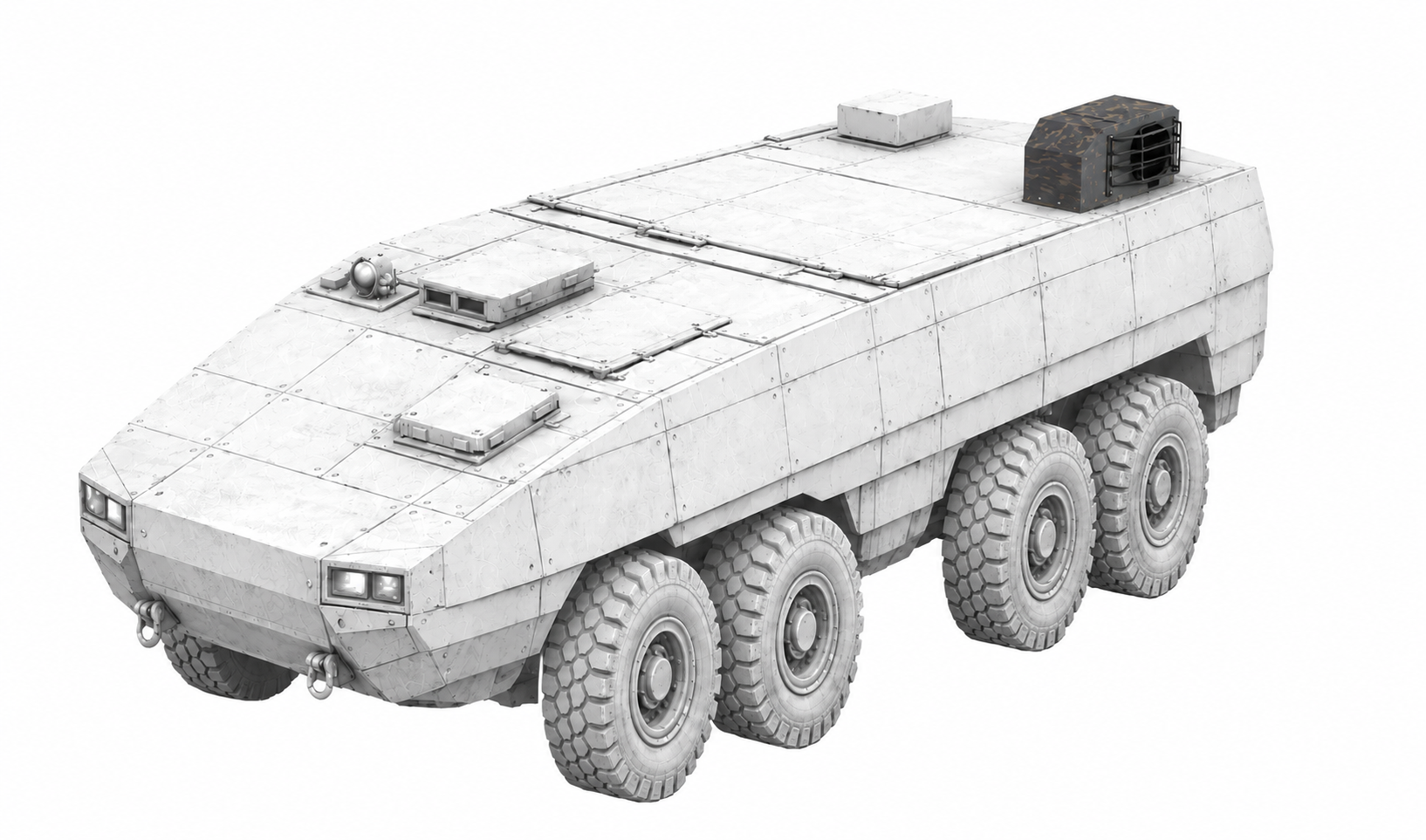
Military personnel carriers do not have a single standard cooling requirement. The required capacity depends on the vehicle configuration, occupancy, equipment, ventilation, operating conditions, and specified interior targets, and must be established through a vehicle-specific cooling-load assessment. The sections below address the key questions that engineers and procurement specialists commonly raise when specifying defense vehicle climate control.
What factors determine the heat load inside a military personnel carrier?
The heat load inside a military personnel carrier is determined by the combined thermal contribution of solar radiation through surfaces, metabolic heat generated by the crew, heat emitted by onboard electronics and communications equipment, engine and drivetrain heat transfer through the vehicle structure, and the ambient temperature differential between the interior and the external environment. Each of these factors must be quantified before a cooling capacity can be specified.
The assessment must also include ventilation and air leakage, together with the moisture introduced by outdoor air and occupants. Where humidity control is required, the cooling system must handle both sensible cooling and the latent load associated with moisture removal.
In practice, the dominant contributors vary by mission profile and climate. In hot desert or equatorial conditions, solar gain through armored surfaces and roof panels can be substantial, particularly when the vehicle is stationary. Crew heat gain depends on the number of occupants and their activity-specific metabolic rates. Clothing and protective equipment can increase physiological heat strain by restricting heat loss, so occupant heat gains and thermal comfort requirements should be assessed for the intended activity and clothing conditions. Electronic systems, including radios, command terminals, and sensor equipment, add a continuous thermal load that has grown significantly as modern vehicles carry more sophisticated electronics.
Structural heat conduction is another factor that distinguishes armored vehicles from standard transport. Steel and composite armor panels conduct heat differently from conventional vehicle body panels, and the thermal mass of the structure affects how quickly the interior heats up when the HVAC system is not running. All of these inputs are combined to produce the total heat load figure that the cooling system must overcome.
How is cooling capacity calculated for a military vehicle?
Cooling capacity is determined by assessing the vehicle’s sensible and latent cooling loads under the agreed design conditions. These include occupants, equipment, solar exposure, heat transfer through the vehicle structure, ventilation, air leakage, and any relevant heat transfer from the powertrain. The required capacity is expressed in kilowatts and must be matched to the cooling system’s performance at those conditions.
The calculation begins with the design temperature conditions: the maximum expected ambient temperature in the intended operating theater, the solar irradiance load for that climate, and the target interior temperature that must be maintained for crew performance and equipment operation. Engineers then model or measure each heat source individually. Crew metabolic load is typically estimated from published physiological data, adjusted for the number of soldiers and their activity level. Electronic equipment heat dissipation figures come from the equipment manufacturers’ specifications.
The assessment should also distinguish between maintaining the required interior conditions during sustained operation and cooling a heat-soaked vehicle down within a specified time. These operating cases can place different demands on the system.
Any design allowance should reflect the agreed operating scenarios and uncertainties in the load assessment rather than an arbitrary increase in capacity.
Once the total heat load is established, a safety margin is applied to account for variability in real-world conditions. The cooling system is then selected or designed to meet that capacity at the specified outdoor ambient temperature. For retrofit projects, where the vehicle already exists and the installation space is constrained, the calculation also has to consider what the existing HVAC system contributes, and whether additional cooling capacity is needed to reach the required total.
How does armored vehicle cooling differ from standard vehicle HVAC?
Armored vehicle HVAC must be specified for the platform’s operating, transport, and storage conditions. Project requirements may include temperature extremes, vibration and shock, dust and moisture exposure, electromagnetic compatibility, and restricted installation space. The required performance and verification methods depend on the vehicle and its intended use.
The physical construction of armored vehicles creates specific engineering challenges. Penetrations through the vehicle hull for refrigerant lines, electrical connections, and air ducting must maintain the vehicle’s ballistic and environmental protection. Components must be mounted to withstand the vibration and shock profiles associated with off-road and tactical driving. Weight and space are tightly constrained; every kilogram and every cubic centimeter of installation space competes with armor, fuel, ammunition, and crew equipment.
Reliability, maintenance access, and the response to reduced cooling or system failure should be defined according to the consequences for personnel, equipment, and vehicle availability. These requirements should be supported by the agreed qualification, testing, and lifecycle-support arrangements.
What cooling capacity is appropriate for a personnel carrier?
Cooling capacity should be selected from the vehicle’s calculated cooling load and verified against the unit’s performance under the specified operating conditions. Vehicle size and crew numbers are useful inputs, but neither establishes the required capacity on its own.
Lumikko identifies its 5 kW retrofit unit as an option for crew vehicles accommodating approximately 8–13 personnel, either as a standalone cooling unit or as supplementary cooling alongside an existing HVAC system. This is an application reference, not a universal sizing rule.
For supplementary cooling, assess the existing system’s available capacity and the additional capacity needed under the same design conditions. The final selection should meet the required interior conditions without unnecessary installation weight, space requirements, or electrical demand.
How does CBRN filtration affect the vehicle’s thermal management system?
Where a vehicle uses overpressure-based CBRN collective protection, filtered outside air is supplied to the protected space to maintain the specified pressure differential. The required airflow depends on the protection concept, pressure requirements, and leakage characteristics of the vehicle. CBRN filtration and HVAC may be separate assemblies or part of an integrated system, but their operation must be compatible.
For cooling-system sizing, assess the sensible and latent loads associated with the required outside-air supply at the specified temperature and humidity conditions. Compare the airflow requirements of normal and protected operating modes rather than assuming that CBRN operation always increases the outside-air volume.
Filter media do not themselves consume electrical power, but their pressure drop affects the blower power needed to deliver the required airflow. Relevant fan and motor heat should be included where it enters the conditioned air or protected space.
Airflow, pressure control, cooling capacity, and air distribution should therefore be assessed together. The final integration approach depends on the vehicle architecture and the applicable protection requirements.
Lumikko has been developing HVAC and climate solutions for the defense industry for over 40 years. Lumikko’s customers include Patria and Millog.
If you are evaluating cooling options for a personnel carrier retrofit or upgrade, Lumikko’s Military Vehicle Air Conditioning Unit, 5 kW is designed specifically for retrofit installation in existing personnel carriers. The unit provides 5 kW of cooling capacity and can operate either as a standalone air conditioning system or as supplementary cooling alongside an existing vehicle HVAC system. Lumikko lists an outdoor environmental temperature range of −39 °C to +44 °C. Cooling performance and permitted operating conditions should be confirmed for the specific installation and design requirements.
Every retrofit project is different. The right cooling solution depends on the vehicle’s existing HVAC system, available installation space, crew size, electronic equipment load, and the operating environment the vehicle must serve. Would you like more information about our solutions? Reach out to us, and let’s create the right solution together.