
How does a 5 kW air conditioning unit cool a military personnel carrier?
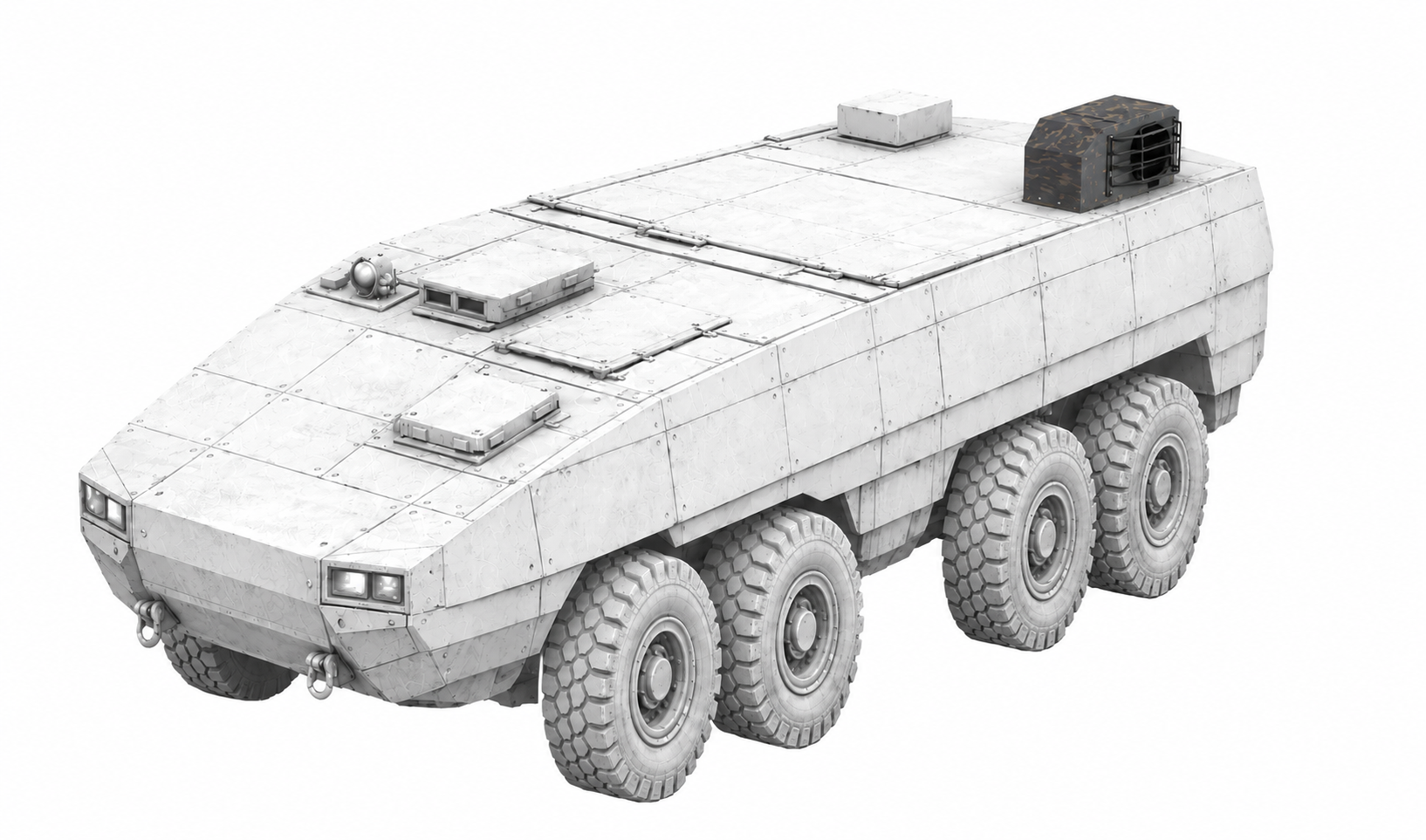
A 5 kW air conditioning unit cools a military personnel carrier by removing heat from the vehicle interior and recirculating conditioned air among the crew. For a personnel carrier accommodating roughly 8 to 13 soldiers, 5 kW of cooling capacity can provide meaningful thermal relief, particularly when the unit operates as a standalone system or supplements an existing vehicle HVAC system. The sections below address the specific heat loads, engineering constraints, and reliability requirements that define military vehicle cooling.
What heat loads does a military personnel carrier actually generate?
A military personnel carrier generates heat from multiple simultaneous sources, and the combined load is substantially higher than the vehicle’s external temperature alone would suggest. The primary contributors are the engine and drivetrain, the vehicle’s electronic and communication systems, direct solar radiation through hatches and vision ports, and the metabolic heat produced by the crew itself. Each soldier at rest generates roughly 80 to 100 watts of body heat, so a fully loaded personnel carrier can add several hundred watts of internal thermal load from personnel alone, before accounting for any equipment.
Electronic warfare systems, communications racks, and navigation equipment installed in modern military vehicles can add further significant heat loads, depending on the mission profile and equipment fit. When a vehicle operates in high-ambient conditions, the difference between interior and exterior temperature can become extreme if cooling is not actively managed. This combination of internal heat generation and external thermal stress is precisely why a purpose-built military vehicle air conditioning system is engineered around the full heat load picture rather than a single variable.
How does a 5 kW cooling capacity translate to real-world comfort?
A 5 kW cooling capacity means the system can continuously remove 5 kilowatts of thermal energy from the vehicle interior. In practical terms, this level of capacity is suited to crew vehicles accommodating approximately 8 to 13 personnel, though the appropriate personnel count depends on whether the unit operates as a standalone air conditioning system or as supplementary cooling alongside an existing vehicle HVAC system. The distinction matters: a standalone unit carries the full cooling burden, while a supplementary unit shares it.
Real-world comfort is also shaped by how efficiently conditioned air is distributed within the cabin. Interior air recirculation is a key part of this, ensuring that cooled air circulates throughout the crew compartment rather than pooling in one area. Lumikko’s 5 kW Military Vehicle Air Conditioning Unit provides both cooling and interior air recirculation, which together support a more uniform cabin temperature under operational conditions.
The unit’s specified outdoor environmental temperature range extends from minus 39 degrees Celsius to plus 44 degrees Celsius, reflecting the wide range of climates in which military vehicles are deployed. The specified indoor ambient temperature range is plus 17 to plus 24 degrees Celsius. These figures describe the operating envelope for which the unit is designed, not a guarantee of identical comfort in every configuration.
Why can’t a standard automotive AC system be used in a military vehicle?
A standard automotive air conditioning system is designed for a civilian passenger vehicle operating within predictable environmental conditions and a defined service interval. Military personnel carriers present fundamentally different demands: extreme temperature ranges, sustained vibration and shock loads, exposure to dust, mud, and moisture, and the need to continue operating reliably in remote locations without access to standard service facilities. Commercial automotive systems are not engineered to these requirements and are not qualified for military operating environments.
Beyond the environmental challenge, military vehicles often operate on 24-volt electrical systems rather than the 12-volt systems common in civilian vehicles. Lumikko’s 5 kW unit operates at 24 V and draws 80 A, which aligns with the electrical architecture of military ground vehicles. A commercial unit designed for a different voltage and load profile cannot simply be substituted.
There are also space and installation constraints specific to armored and protected vehicles. The geometry of a personnel carrier’s hull, roof structure, and internal layout requires a cooling unit that can be adapted to available installation positions. Lumikko’s unit is specifically designed for retrofit installation, with a form factor that allows placement adjacent to an existing roof hatch or in another suitable location depending on the vehicle’s configuration. This level of adaptability is not a feature of standard automotive AC components.
How is a defense vehicle HVAC system integrated with CBRN filtration?
CBRN filtration and vehicle air conditioning serve related but distinct functions in a military vehicle’s environmental control system. CBRN filtration systems are designed to protect the crew from chemical, biological, radiological, and nuclear airborne contaminants, typically by filtering incoming air and maintaining a controlled overpressure within the crew compartment. Air conditioning manages thermal comfort by cooling and recirculating interior air. In many military vehicle programs, these two systems are designed to work together as part of an integrated environmental control architecture.
The specific integration approach depends on the vehicle platform, the threat environment, and the applicable project requirements. Lumikko has more than 40 years of experience developing HVAC and air filtration solutions for the defense industry, including CBRN filtration systems for vehicles and mobile military assets. The design of any integrated solution is defined around the customer’s specific vehicle, operational requirements, and applicable standards rather than a fixed product architecture.
It is important to note that Lumikko’s 5 kW Military Vehicle Air Conditioning Unit is an air conditioning and cooling solution providing cooling and interior air recirculation. It is not presented as a CBRN filtration system. For projects requiring both cooling and CBRN protection, the appropriate combination of systems would be determined based on the vehicle and mission requirements. Lumikko’s defense customers include Patria and Millog.
What makes a military vehicle AC unit reliable in extreme conditions?
Reliability in a military vehicle air conditioning unit comes from how the system is engineered, not from adapting a commercial product to a more demanding role. Key factors include component selection suited to wide temperature ranges, mechanical construction that can withstand sustained vibration and shock, and a design that accounts for the ingress of dust and moisture common in off-road military operations. Each of these factors must be addressed at the design stage rather than managed through more frequent maintenance.
The specified outdoor environmental temperature range of Lumikko’s 5 kW unit, from minus 39 to plus 44 degrees Celsius, reflects the thermal extremes that the system is designed to handle. This range spans arctic operating conditions through desert and tropical environments, which is consistent with the deployment range of modern military forces.
Equally important is the ability to retrofit the unit into existing vehicles without compromising the vehicle’s structural or operational integrity. A retrofit cooling solution must be installable in the available space, compatible with the vehicle’s electrical system, and maintainable in field conditions. Lumikko designs and manufactures its defense cooling systems at its own factory in Seinäjoki, Finland, under ISO 9001 quality management, which supports consistent manufacturing quality and the long-term availability of spare parts and service support across the product lifecycle.
Would you like more information about our solutions? Every retrofit project is different, and the right cooling solution depends on the vehicle, the existing HVAC system, available installation space, cooling requirements, and the operating environment. Reach out to Lumikko to discuss your military vehicle retrofit or cooling requirements, and let’s create the right solution together. You can learn more about Lumikko’s 5 kW Military Vehicle Air Conditioning Unit, which is designed for retrofit installation in personnel carriers and can operate either as a standalone air conditioning unit or as supplementary cooling alongside an existing vehicle HVAC system.