
Where can an air conditioning unit be installed on a personnel carrier?
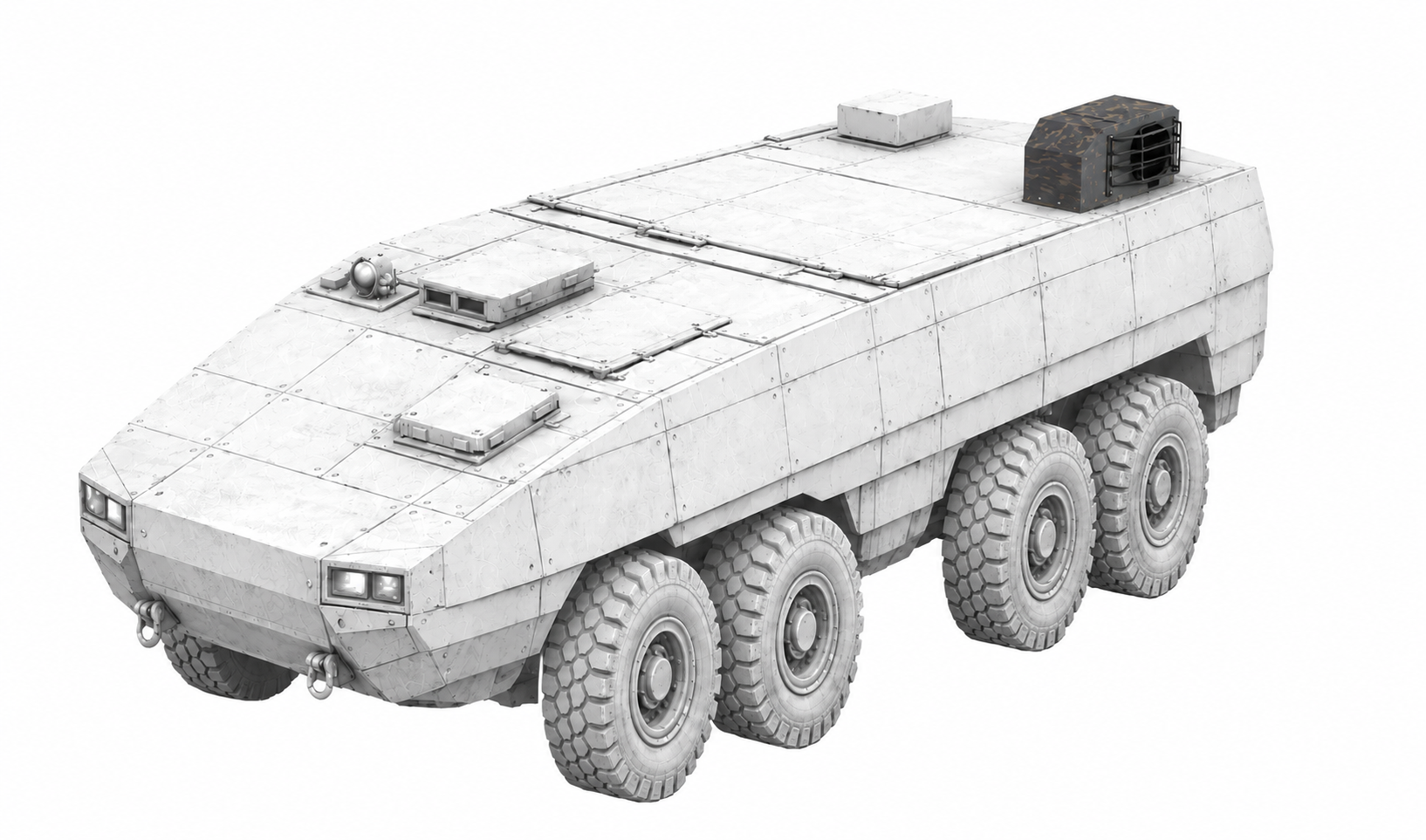
An air conditioning unit can be installed in several locations on a personnel carrier, with the most common position being adjacent to an existing roof hatch. However, the appropriate installation location depends on the individual vehicle’s design, available space, and configuration; there is no single fixed position that applies to all platforms. The sections below address the key questions that arise when planning AC installation on a military vehicle.
What installation locations are available on a personnel carrier?
On most personnel carriers, the primary installation location for an air conditioning unit is adjacent to an existing roof hatch, where structural access and available volume typically make mounting practical. Beyond this common position, the unit can be installed in any suitable location on the vehicle, provided the space, structural conditions, and routing requirements allow it.
The range of viable positions varies considerably between vehicle types. Roof mounting near a hatch opening is frequently chosen because it allows the unit to be integrated without major modifications to the vehicle hull. However, depending on the platform, alternative positions along the roof line, at the rear of the crew compartment, or in other structurally appropriate areas may be considered when the primary location is unavailable or unsuitable.
Because personnel carriers differ significantly in hull geometry, internal layout, and existing equipment, the installation location is always assessed on a vehicle-by-vehicle basis. There is no universal mounting position that fits every platform.
How does the choice of location affect cooling performance?
The installation location directly influences how effectively conditioned air reaches the personnel inside the vehicle. A position that allows even air distribution across the crew compartment will generally deliver better thermal comfort than a location that creates uneven airflow or forces air to travel around obstructions before reaching personnel.
Key performance factors tied to location include the distance between the unit and the areas requiring cooling, the routing path for air distribution, and whether the unit’s condenser side has adequate access to external airflow for heat rejection. If the condenser cannot effectively exchange heat with the outside environment, cooling capacity will be reduced regardless of the unit’s rated output.
The relationship between the air conditioning unit and any existing HVAC system also matters. When the unit is used as supplementary cooling alongside an existing system, its position relative to that system’s air distribution path affects how the two work together. A well-chosen location supports the existing system rather than creating competing airflow patterns within the crew compartment.
What constraints limit where an AC unit can be placed on a military vehicle?
Several practical constraints define which installation positions are viable on a given personnel carrier. These constraints are structural, spatial, electrical, and operational in nature, and they must all be assessed before a mounting location is confirmed.
Structural and spatial constraints
The vehicle hull must be able to support the weight and dimensions of the unit at the chosen location. A 5 kW military vehicle air conditioning unit of the type used in personnel carrier applications can weigh in the region of 238 kg, with dimensions of approximately 1241 x 1230 x 532 mm, which means structural reinforcement may be required depending on where it is mounted. Available internal and external space, clearance from other components, and the ability to route refrigerant lines and electrical connections without compromising the vehicle’s integrity all factor into location selection.
Electrical and operational constraints
The unit must be connected to the vehicle’s electrical system, typically a 24 V supply, which means cable routing and load capacity at the chosen location must be verified. Operational constraints include maintainability; the unit must be accessible for field servicing, and the need to avoid positions that would interfere with hatches, weapon systems, antennas, or other mission-critical equipment. Environmental sealing at any penetration point through the hull is also a requirement that affects where installation is feasible.
Should the AC unit be integrated with the vehicle’s existing systems?
Whether to integrate the air conditioning unit with the vehicle’s existing HVAC system or operate it independently depends on the vehicle’s current cooling capability and the project’s requirements. Both configurations are viable, and the right choice is determined by the specific situation rather than a general preference.
When a vehicle already has a functioning HVAC system that provides partial cooling, adding a 5 kW unit as supplementary cooling can increase total capacity without replacing the existing installation. This approach is relevant when the current system no longer meets demand due to additional equipment, increased personnel load, or modified operating conditions. The supplementary unit works alongside the existing system to cover the shortfall.
When a vehicle has no existing cooling capability, or when the existing system is being removed as part of a broader upgrade, the air conditioning unit can operate as a standalone cooling solution. In this configuration, it provides all required cooling and interior air recirculation independently, without relying on another system. The appropriate configuration is always determined by the vehicle, its existing equipment, and the operational cooling requirements.
How is a personnel carrier AC unit designed for field maintenance?
An air conditioning unit for a personnel carrier must be maintainable under field conditions, which means the design should allow technicians to inspect, service, and replace components without specialised workshop infrastructure. Accessibility at the installation location is therefore a design consideration from the outset, not an afterthought.
Key design principles for field maintainability include accessible service points, the ability to replace components without full disassembly of the unit or surrounding vehicle structure, and robust construction that reduces the frequency of maintenance interventions. Units intended for military vehicle applications are typically built to withstand vibration, temperature extremes, dust, and moisture.
The published ambient operating temperature range for this product extends from -39 °C to +44 °C, reflecting the climatic conditions personnel carriers may operate in. This range describes the conditions under which the unit is designed to function; actual cooling performance will vary depending on ambient temperature, heat load, and installation configuration. Maintenance procedures must remain practical across the same range of conditions. Long-term aftermarket support, including spare parts availability, maintenance services, and the ability to upgrade or repair the unit over its service life, is part of the overall solution rather than a separate consideration.
Lumikko’s approach to defence vehicle cooling covers the full lifecycle: from initial design and installation through to long-term service support. Lumikko’s customers in the defence sector include Patria and Millog.
Every retrofit project is different. The right installation location, system configuration, and cooling capacity depend on the vehicle, its existing HVAC system, available installation space, personnel load, and operating environment. Lumikko’s 5 kW Military Vehicle Air Conditioning Unit is designed specifically for retrofit installation in personnel carriers and can be configured either as a standalone cooling unit or as supplementary cooling alongside an existing HVAC system. Reach out to us to discuss the right solution for your vehicle.